

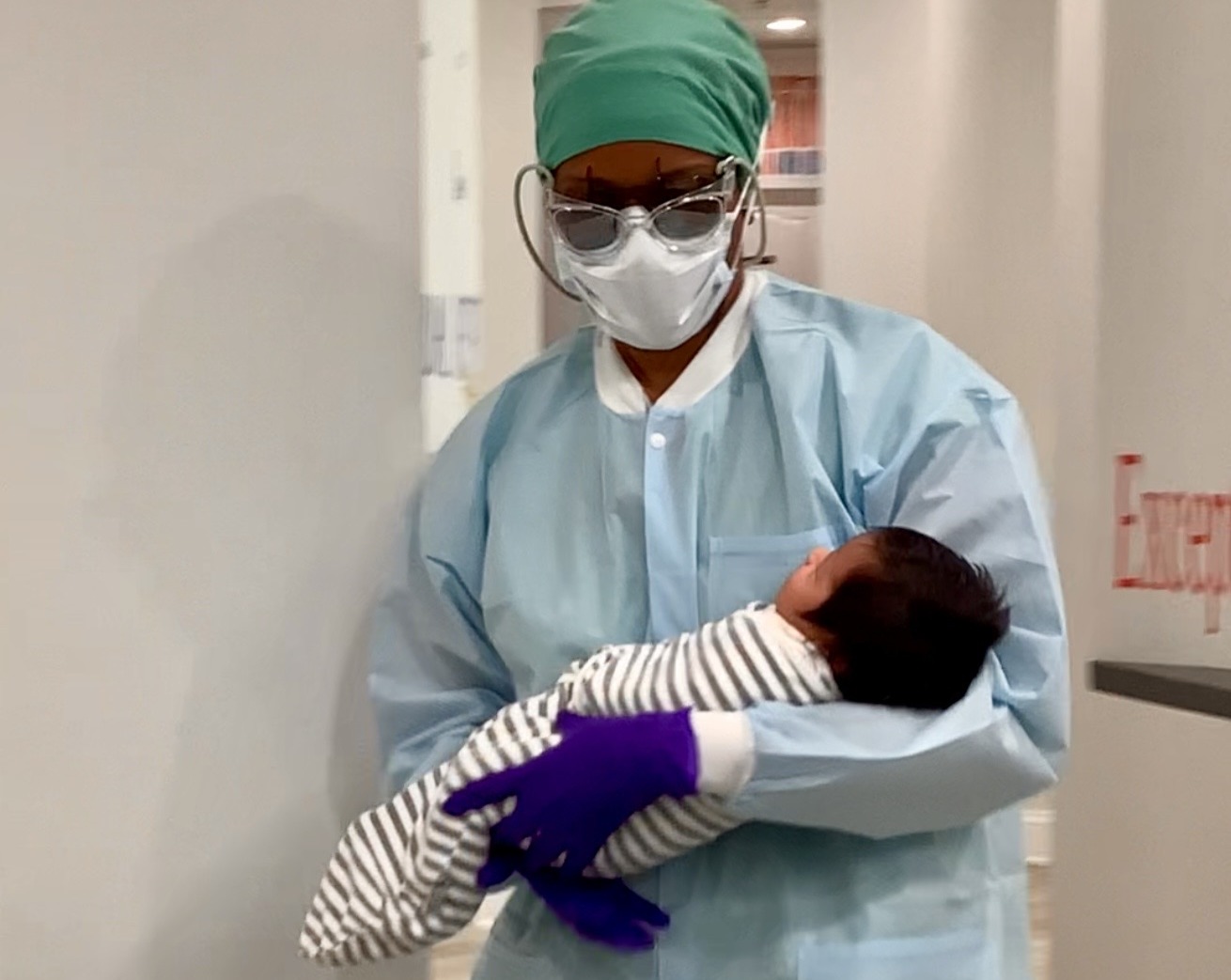
You are finally home with your newborn, ready to embrace every beautiful, exhausting moment of early parenthood, and then feeding becomes a struggle no one warned you about. Pain with every latch, a baby who cannot seem to stay on or feed effectively and a growing worry something might be wrong can leave new parents feeling overwhelmed and searching for answers. When a specialist mentions the word “frenectomy,” it can feel like the stakes just got even higher. The good news is this referral is not something to fear. It is a meaningful step toward getting your baby the support they need.
At University Pediatric Dentistry, Dr. Funny has been helping Charlotte families navigate exactly these moments for over 18 years. With a deep focus on tongue-tie and lip-tie treatments, Dr. Funny works closely with lactation consultants, speech therapists, occupational therapists, physical therapists and other healthcare providers to ensure every infant receives a thorough evaluation before any procedure is recommended. If a specialist has suggested a frenectomy, understanding why can help you feel confident as you move forward.
What Is a Frenectomy and Why Would a Specialist Suggest It?
A frenectomy is a minor procedure that releases a tight or restrictive frenulum, which is the small band of tissue connecting the tongue to the floor of the mouth or the upper lip to the gum. When this tissue is too short or inflexible, it limits movement in ways that directly affect a baby’s ability to feed effectively.
Lactation consultants (IBCLCs), speech therapists (SLPs), occupational therapists (OTs) and physical therapists (PTs) are often among the first to identify feeding and developmental issues tied to restricted oral tissue because they observe latch, feeding mechanics and oral function up close.
Signs such as shallow latch, clicking sounds during feeding, poor weight gain, excessive gas, nipple pain and a baby who tires quickly during nursing can all point toward a possible tongue-tie or lip-tie. Because these providers are not licensed to perform procedures, they refer families to a qualified pediatric dentist for a formal assessment.
What Happens During the Assessment?
A frenectomy assessment at University Pediatric Dentistry is a comprehensive evaluation, not just a quick look inside the mouth. Dr. Funny examines the structure and function of the frenulum, taking into account how the restriction is affecting the baby’s feeding patterns and overall oral development. This functional approach means the decision to proceed is based on real impact, not appearance alone.
Research published in a 2023 systematic review highlights the growing body of literature connecting tongue-tie with breastfeeding difficulties, while also underscoring the need for thorough, individualized assessment before treatment. This reflects exactly the kind of care Dr. Funny delivers: thoughtful, evidence-informed and centered on what is best for your child.
What Does a Frenectomy Involve?
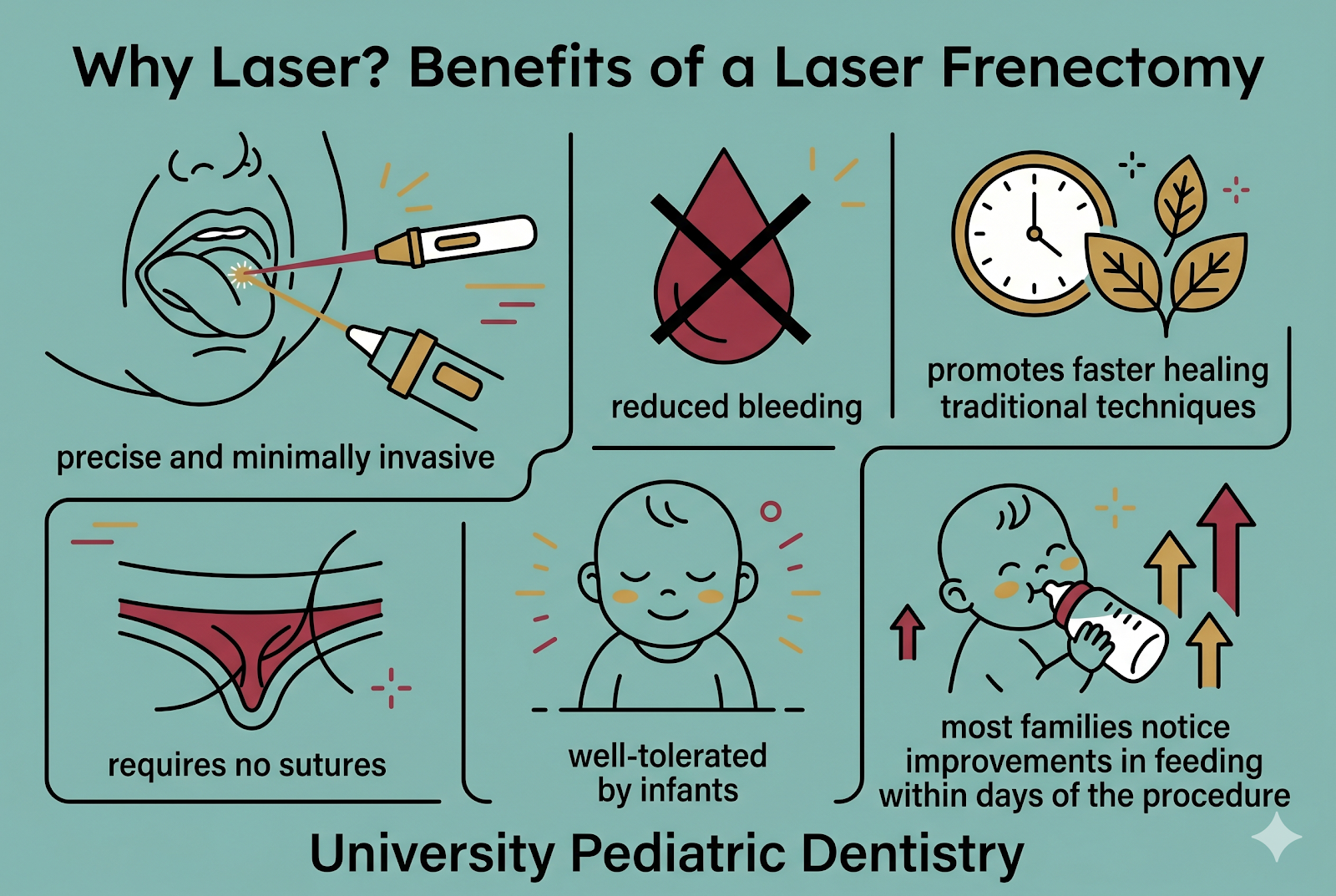
When a frenectomy is recommended, University Pediatric Dentistry uses laser dentistry to perform the procedure. Laser frenectomies are precise, minimally invasive and typically well-tolerated by infants. The laser reduces bleeding and promotes faster healing compared to traditional techniques, making the entire process gentler for your baby and less stressful for you.
The procedure itself is quick and most families notice improvements in feeding within days. That said, outcomes are best when post-procedure stretching exercises are performed consistently and when post-treatment care instructions are followed closely. Dr. Funny and the team walk every family through exactly what to expect before they leave the office.
Will My Baby Still Need Follow-Up Care After the Procedure?
Yes, and this is an important piece of the puzzle many parents overlook. A frenectomy releases the restriction, but it does not automatically retrain the muscles involved in feeding. Continued work with your referring provider after the procedure, whether that is a lactation consultant, SLP, OT or PT, helps your baby relearn how to feed with their newly freed range of motion. The relationship between your pediatric dentist and your care team is a collaborative one and everyone plays a role in your baby’s success.
Parents can also explore the early infant oral care resources available through University Pediatric Dentistry to better understand your baby’s oral health from the very beginning. Knowledge and support go hand in hand throughout this process.
Trust University Pediatric Dentistry With Your Baby’s Care
When a specialist points you toward a frenectomy evaluation, they have identified a potential barrier to your baby’s feeding and development and want you to have the right team in your corner. Dr. Funny brings over 18 years of experience in pediatric dentistry, including focused care for tongue-tie and lip-tie, to every family she sees. As a mother herself, she approaches each evaluation with genuine compassion and clinical precision.
University Pediatric Dentistry proudly serves families throughout Charlotte and the surrounding communities. If your care team has recommended an evaluation or you have noticed signs of a feeding struggle in your newborn, we encourage you to take that next step. Contact our office today to schedule your child’s assessment with Dr. Funny.