
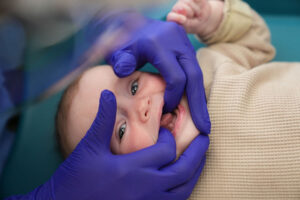
 When a newborn struggles to latch or a toddler has trouble eating certain textures and developing clear speech, parents often feel frustrated trying to find answers. A tongue tie or lip tie may be the reason behind these challenges. These conditions are more common than many families realize, and when left unaddressed they can affect feeding, speech development, airway function and overall quality of life. If your child is showing signs of a restricted tongue or lip, working with an experienced pediatric dentist in Charlotte for the right evaluation can make all the difference.
At University Pediatric Dentistry, tongue tie and lip tie treatment is one of our most sought-after pediatric dental services. Dr. Funny has over 18 years of experience evaluating and treating oral restrictions in infants, children and adolescents. As a board-certified pediatric dentist, a private practice owner and a mother herself, she understands the urgency parents feel when something isn’t right with their child’s feeding or speech. We reserve appointments specifically so families can get in quickly and get the clarity they need.
Tongue tie (ankyloglossia) occurs when the thin strip of tissue connecting the underside of the tongue to the floor of the mouth is too short, thick or tight. This restricts the tongue’s range of motion and can interfere with feeding, speech and oral development. A lip tie is a similar condition where the tissue connecting the upper lip to the upper gum limits lip movement, making it difficult for a child to latch or feed effectively.
According to the American Academy of Pediatrics, the diagnosis of ankyloglossia has increased significantly in recent years. Both tongue tie and lip tie are present from birth and can range from mild to severe in how they affect a child’s function and development. Understanding the signs early gives families the best opportunity to act before these restrictions lead to longer-term challenges.
Concerned About Your Child’s Feeding or Speech?
We reserve appointments specifically for tongue tie and lip tie evaluations so your family can get answers quickly.
REQUEST AN APPOINTMENTIn newborns and young infants, feeding is often the first area where a tongue tie or lip tie becomes apparent. Some of the most common signs we see include the following:
These symptoms can take a toll on both the infant and the breastfeeding parent. When feeding is consistently difficult despite proper positioning and latch support, a tongue tie or lip tie evaluation may be the logical next step.
As children grow, the effects of a tongue tie or lip tie may shift from feeding to speech, eating habits and even sleep. Parents of toddlers and older children may notice the following:
If any of these patterns sound familiar, scheduling an evaluation with Dr. Funny is the next step toward getting answers for your family.
Before any treatment is recommended, we conduct a thorough functional assessment of your child’s tongue and lip mobility, feeding patterns, speech and overall oral development. To schedule this visit, a referral from a functional assessment provider is required. Our goal is never to recommend a procedure that is not clearly needed. We take a careful and individualized approach and make sure every family understands the findings before moving forward. Not every child with a visible tie needs treatment, and we are transparent about when observation is the better path.
 When treatment is indicated, we may recommend a frenectomy. A frenectomy is a gentle procedure that releases the restrictive tissue to restore normal mobility of the tongue or lip. At University Pediatric Dentistry, we use the Solea® CO2 laser to perform frenectomies with precision and minimal discomfort. The Solea is the first CO2 dental laser system cleared by the FDA for both hard and soft tissue procedures, and it allows Dr. Funny to complete frenectomies with virtually no bleeding and faster healing compared to traditional methods.
For most children, the procedure itself takes only a few minutes. Little to no anesthesia is needed in many cases, and there are no sutures required. Children who need additional comfort during the procedure can benefit from options like nitrous oxide. It is important to note that the laser is not used during sedation dentistry procedures, so Dr. Funny tailors the approach based on each child’s individual needs.
The CO2 laser offers several advantages over traditional surgical methods and even other laser types commonly used in dental offices. Benefits include the following:
These benefits make the experience gentler for children and less stressful for parents, which is why we have invested in this technology as part of our commitment to comfort-focused care.
Ready to Learn More About Laser Frenectomy?
Dr. Funny and our team can walk you through the process and answer any questions before your visit.
CONTACT OUR TEAMMany families notice improvements right away, particularly with feeding. Breastfeeding mothers often report a better latch and less discomfort within the first few days after the procedure. For older children, improvements in speech and eating habits may develop more gradually, especially when paired with supportive care from a speech therapist or myofunctional therapist.
We provide detailed post-procedure stretching exercises and care instructions so families feel confident managing recovery at home. These exercises are important for helping the tissue heal properly and preventing reattachment. For infants, we encourage parents to resume feeding as soon as possible after the procedure because feeding itself supports healthy healing.
Dr. Funny personally follows up with a virtual call after every frenectomy to check on healing and answer any questions. If a concern comes up between appointments, our team is responsive and accessible. For families dealing with an urgent situation, we also offer emergency care appointments to accommodate children who need to be seen quickly. Continued preventive care visits after treatment help us monitor your child’s ongoing oral development and make sure progress stays on track.
Have Questions About Your Child’s Treatment?
Whether you are exploring options or ready to schedule, our team is here to help your family every step of the way.
GET IN TOUCHFamilies across Charlotte trust University Pediatric Dentistry because Dr. Funny brings the clinical knowledge of a board-certified pediatric dentist and the perspective of a mother who understands what it means to want answers for your child. With over 18 years of experience and a track record backed by over 1,000 Google reviews, she has built one of the most trusted names in tongue tie and lip tie care in the Charlotte area. Her approach is thorough, individualized and grounded in doing what is right for each child rather than recommending treatment that is not clearly warranted. Learn more about her background on her doctor profile.
If you are concerned your child may have a tongue tie or lip tie, do not wait. Contact our office to schedule a functional assessment with Dr. Funny and take the first step toward answers. For families seeking flexible payment options, we accept CareCredit, HSA and FSA funds, cash and major credit cards. We also offer an in-house membership plan for families without traditional dental insurance. Visit our financial options page to learn more about the ways we can make care affordable for your family.