


When a Child Needs a Crown
Not every cavity calls for a crown, but some situations clearly do. Crowns are typically recommended when a tooth has decay on multiple surfaces, when a filling would not hold up to chewing forces or when a tooth has been weakened by a larger restorative procedure. They are also commonly placed after pulp therapy on a primary tooth to seal and protect what remains of the natural structure.
Developmental issues can also call for a crown. Children born with enamel defects such as hypoplasia or hypocalcification often have teeth that wear down rapidly, and a crown provides full coverage that helps the tooth last until it naturally exfoliates. Knowing when to restore and when to simply monitor comes down to clinical experience, and it is something we take very seriously at each visit, including during emergency pediatric care when a fractured or badly decayed tooth needs a quick decision.
Types of Pediatric Crowns We Offer
Because no two children are alike, we use a range of crown materials tailored to the tooth being treated, the child’s bite and each family’s preferences. The goal is always the same: restore function, protect the tooth and look as natural as possible.
Options we commonly discuss with families include:
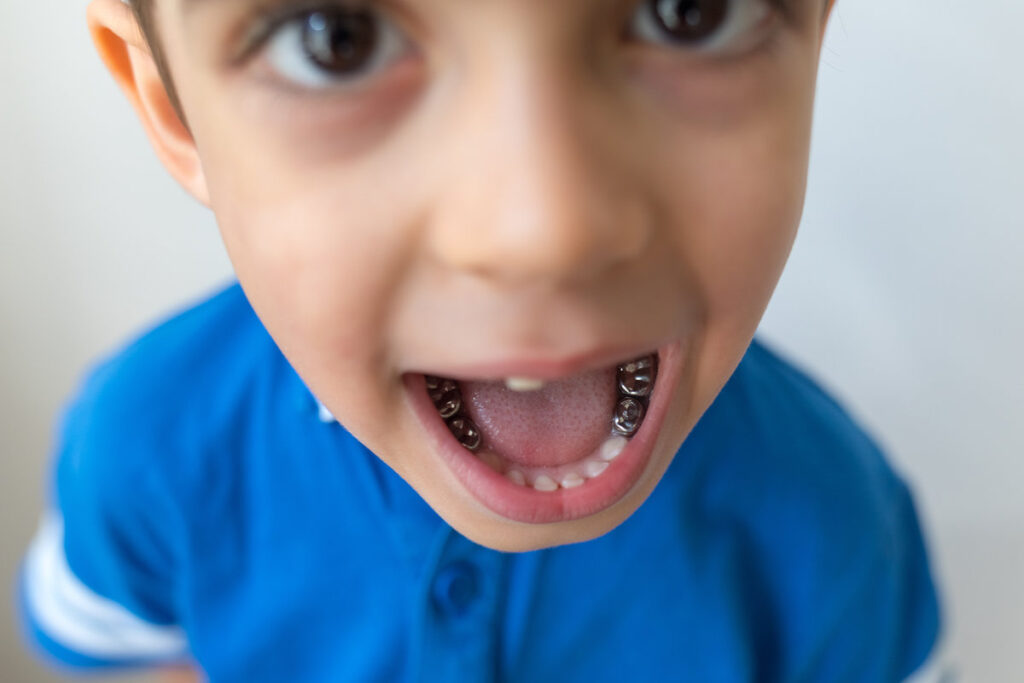
- Stainless steel crowns: Prefabricated metal crowns that are extremely durable and ideal for back molars where strength matters most
- Zirconia crowns: Tooth-colored ceramic crowns that offer a natural appearance, frequently chosen for front teeth
- Resin-based crown strips: Used in select front-tooth cases where appearance is a priority and bite forces are lower
According to the AAPD’s restorative guidelines, stainless steel crowns remain one of the most reliable and cost-effective restorations for primary molars, with very high long-term success rates. Dr. Funny walks every family through the options so you understand why a specific material is recommended for your child.
What to Expect During a Pediatric Crown Appointment
A crown appointment is more involved than a filling, but it is still a single visit in most cases. After numbing the tooth gently and confirming your child is comfortable, we remove the decay, shape the tooth and fit a crown that matches the bite. The crown is then cemented in place, and your child is on their way.
We know for some kids, the idea of any dental work can feel overwhelming. Our environment is built to reduce that stress, with dim lighting, sensory toys, quiet rooms and a team trained to work at your child’s pace. When additional support is needed, we can discuss sedation options during your consultation. Children with sensory or medical complexities are always welcome, and our experience with special needs dentistry shapes every aspect of how we deliver care.
Caring for Your Child’s Crown at Home
Once the crown is placed, daily care looks very similar to caring for any other tooth. Regular brushing, flossing around the crown margin and avoiding sticky or rock-hard foods in the first 24 hours after placement help the restoration settle in. Soreness, if any, usually fades within a day or two.
Long-term, routine checkups are essential. We monitor the crown, the surrounding gum tissue and the tooth underneath at every recall visit, and we track when the tooth is ready to exfoliate naturally so the permanent tooth can emerge on schedule. If the crown ever feels loose, sore or different, call us right away and we will get your child in for a quick look.
Schedule a Pediatric Crown Consultation at University Pediatric Dentistry
Choosing the right practice for your child’s restorative care matters, and University Pediatric Dentistry has built its reputation over 15 years on getting that right. Dr. Funny holds board certification in pediatric dentistry, has earned recognition as a Charlotte TOP Dentist year after year and leads a team committed to making even the most involved procedures feel manageable for children and parents alike. We are in-network with Delta Dental PPO, accept all other PPO plans out of network and offer CareCredit and HSA/FSA payments to help keep care accessible for every family we see.
If your child has been told they need a crown, or if you are concerned about a tooth that looks damaged or worn, we would love to take a closer look. Contact our office to schedule a pediatric crown consultation.