

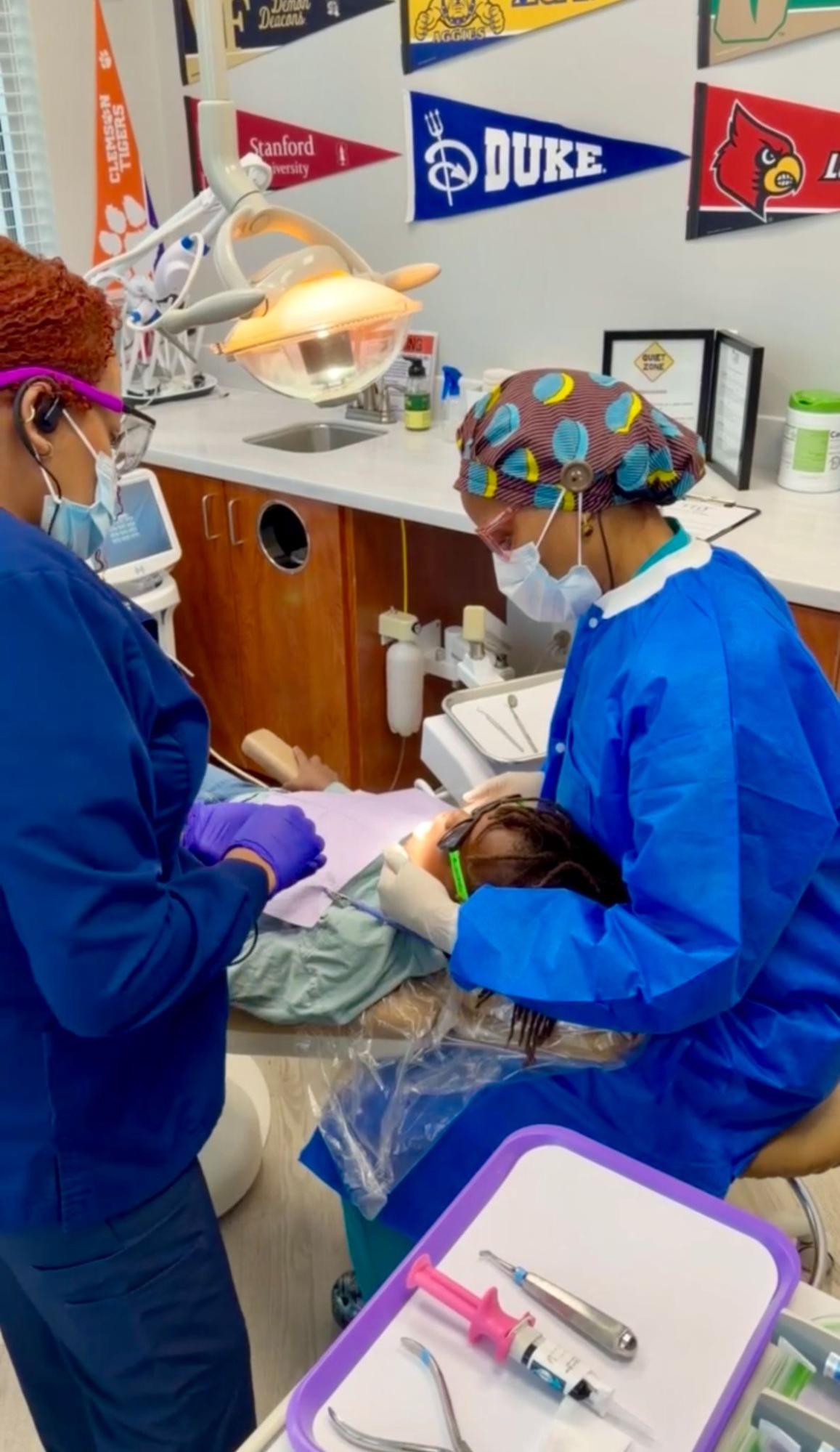
Losing a baby tooth ahead of schedule might seem like a small thing, but the space left behind can quietly cause big problems for your child’s developing smile. When a primary tooth is lost too early due to decay, injury or another cause, neighboring teeth can begin to drift into the gap before the permanent tooth is ready to come in. That shifting can lead to crowding, misalignment and a more complicated path to a healthy bite down the road. The good news is there is a straightforward solution designed to protect that space until the time is right.
At University Pediatric Dentistry, Dr. Funny has guided Charlotte families through this exact situation for 15 years. As an owner-operated practice focused on the long-term oral health of every child, University Pediatric Dentistry takes a proactive approach to preventing problems before they become bigger ones. A space maintainer is one of the most effective preventive tools available and understanding how it works can help you feel prepared.
What Is a Space Maintainer?
A space maintainer is a small dental appliance placed in your child’s mouth to hold the gap left by a lost baby tooth. Its job is to keep neighboring teeth from shifting into the empty space so the incoming permanent tooth has room to erupt properly.
Research on orthodontic space management in pediatric dentistry confirms that early tooth loss can lead to adjacent teeth migrating into the extraction space, reducing arch length and potentially causing crowding or impaction of permanent teeth. A space maintainer works to prevent exactly that by preserving the natural space until the permanent tooth is ready.
Does Every Early Tooth Loss Require a Space Maintainer?
Not always, and that is why a professional evaluation matters. The need for a space maintainer depends on several factors, including which tooth was lost, how old your child is and how close the permanent tooth is to coming in. Dr. Funny will assess the situation and recommend the right course of action based on your child’s individual development.
What Are the Different Types of Space Maintainers?
There are a few different designs depending on your child’s age, the location of the lost tooth and whether one or both sides of the mouth are affected. Dr. Funny will walk you through the options during your visit. The most common types used in pediatric dentistry include the following.
- Band and loop: A metal band is attached to an adjacent tooth with a looped wire to hold the space open.
- Distal shoe: This option is used when a back molar is lost before the permanent tooth beneath it has erupted.
- Lingual arch: A wire connected along the inside of the lower teeth maintains space on both sides of the mouth.
Each type serves a specific purpose and Dr. Funny will determine which is most appropriate for your child’s needs.
How Do You Care for a Space Maintainer?
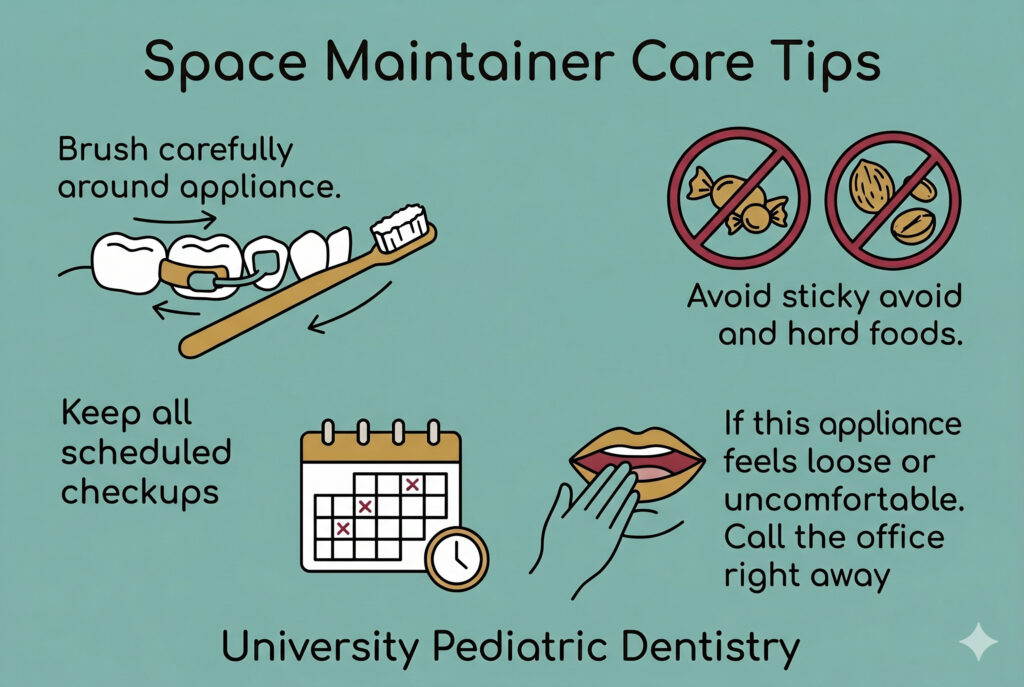
Caring for a space maintainer is straightforward with the right habits in place. Your child should brush carefully around the appliance and avoid sticky or hard foods that could loosen or damage it. Regular checkups at University Pediatric Dentistry allow Dr. Funny to monitor the appliance and your child’s developing teeth to ensure everything is progressing as expected.
Good preventive care habits at home combined with consistent professional visits give your child the best foundation for a healthy smile. If a space maintainer becomes loose or uncomfortable at any point, it is important to contact the office promptly rather than waiting for the next scheduled appointment.
Trust University Pediatric Dentistry With Your Child’s Smile
Early tooth loss does not have to mean long-term dental problems when the right steps are taken quickly. Dr. Funny and the team at University Pediatric Dentistry bring over 15 years of experience in pediatric dental care to every patient they see, helping Charlotte families stay ahead of potential issues with thoughtful, personalized treatment. From patient resources to hands-on evaluations, the practice is built around making sure every child’s smile develops the way it should.
If your child has lost a tooth earlier than expected or you have questions about whether a space maintainer may be needed, we are here to help. Contact our office today to schedule an evaluation with Dr. Funny.