

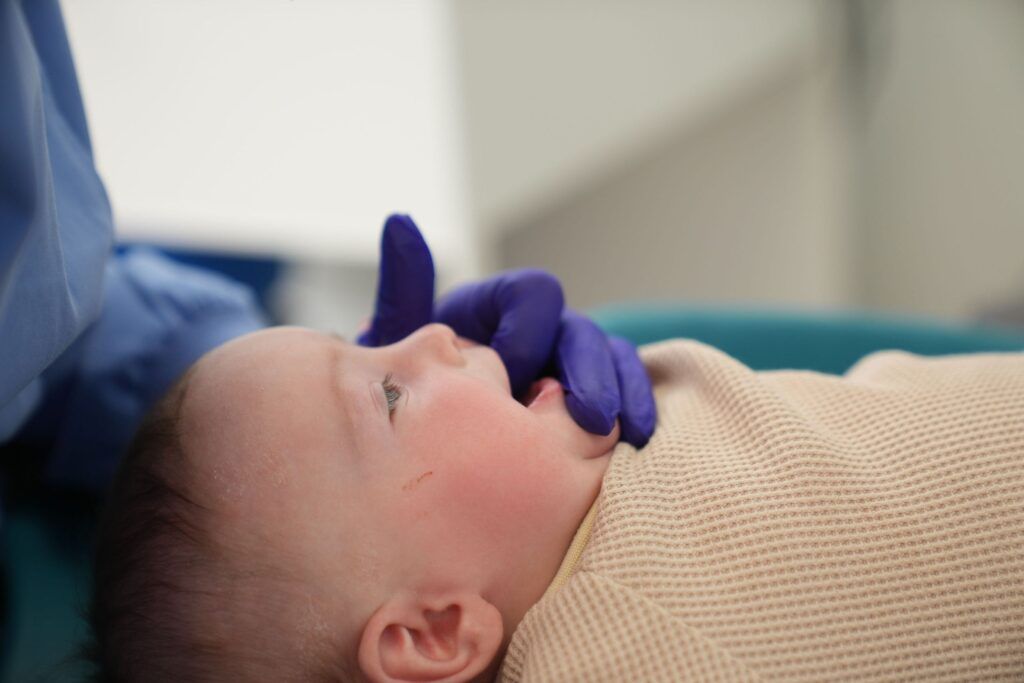
A tongue-tie or lip-tie is not always obvious, but the signs are often present in how your baby feeds, how your toddler speaks or how your older child chews and breathes. These are conditions where a small band of tissue restricts the normal movement of the tongue or upper lip. While they vary widely in severity, they can affect a child’s development in real and meaningful ways. If something has felt off and you have not been able to put your finger on it, a tongue-tie or lip-tie may be worth looking into.
At University Pediatric Dentistry, Dr. Funny brings years of experience evaluating and treating tongue-ties and lip-ties in children across the Charlotte area. Frenectomies are among the most sought-after services at our practice, and Dr. Funny takes a careful, individualized approach to every assessment. Getting the right evaluation early can make a meaningful difference in how smoothly your child feeds, speaks and grows.
What Is a Tongue-Tie and What Is a Lip-Tie?
A tongue-tie, known clinically as ankyloglossia, occurs when the strip of tissue connecting the underside of the tongue to the floor of the mouth is unusually short, thick or tight, limiting how freely the tongue can move. A lip-tie involves a similar issue with the tissue connecting the upper lip to the gum, restricting how far the lip can lift or flare. Both conditions are present at birth and range from mild to more significant in their impact.
The two often occur together, but a child can have one without the other. What matters most is not whether the tissue is present but if it is causing functional problems for the child. A thorough evaluation is the only way to know for certain.
Early Signs in Babies and Newborns
For new parents, feeding difficulties are often the first clue. A tongue-tie or lip-tie can interfere with a baby’s ability to latch and feed effectively, making nursing painful for the mother and frustrating for the baby. The American Academy of Pediatrics published updated clinical guidance in 2024, recognizing that when a restricted frenulum is causing breastfeeding difficulties that do not improve with other support, further evaluation is warranted.
Common signs in infants include poor latch or difficulty staying latched, clicking sounds during feeding, slow weight gain, excessive gassiness and a baby who tires quickly while nursing or bottle feeding. Families with newborns can also find helpful context in our early infant oral care resources.
Signs to Watch for in Toddlers and Older Children
As children grow, the signs of an unaddressed tongue-tie or lip-tie can shift. Feeding concerns may lead to speech challenges, difficulty with certain sounds or articulation issues that persist despite other interventions. Some children struggle to move food around in their mouths properly, leading to difficulty with certain textures or a limited diet. Others may develop a gap between the two front teeth as a result of a prominent lip-tie.
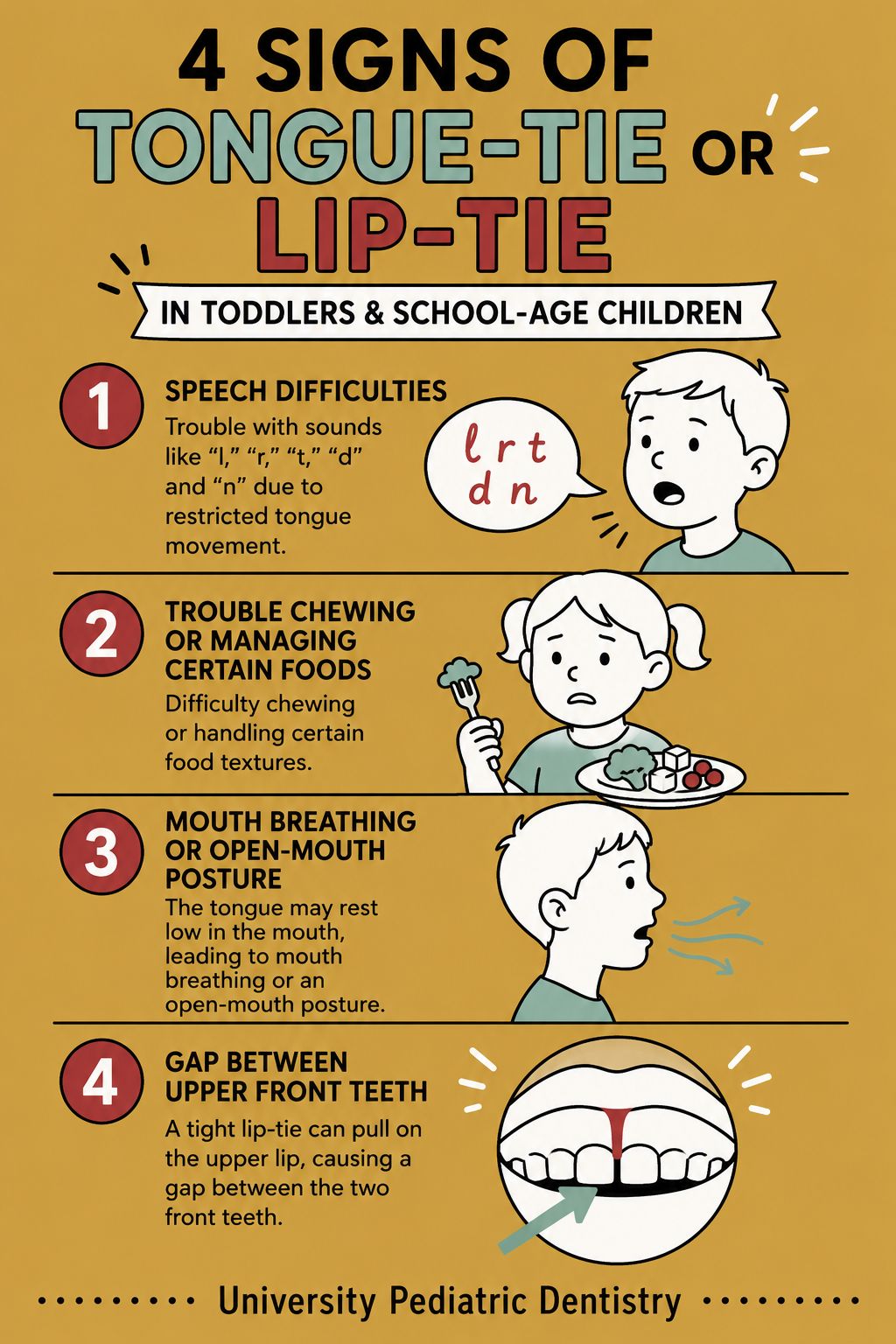
Watch for signs like these in toddlers and school-age children:
- Speech difficulties: Trouble with sounds that require full tongue mobility, such as “l,” “r,” “t,” “d” and “n,” can be linked to restricted tongue movement.
- Difficulty with certain foods: A child who struggles to chew, move food around or manage certain textures may have limited tongue function.
- Mouth breathing or open-mouth posture: A tongue-tie can affect how the tongue rests in the mouth, which may contribute to mouth breathing over time.
- Dental spacing concerns: A tight lip-tie attachment can create a visible gap between the upper front teeth as they come in.

These signs do not automatically mean a frenectomy is needed, but they are worth discussing with a qualified provider who can perform a proper functional assessment.
What Happens After a Diagnosis
If Dr. Funny determines a frenectomy is the right course of action, our practice offers laser dentistry as a precise and minimally invasive option for the procedure. Laser frenectomies typically involve less bleeding, reduced discomfort and faster healing compared to traditional methods. Dr. Funny will walk your family through exactly what to expect before, during and after treatment.
Not every evaluation leads to a procedure. In some cases, monitoring or other supportive care is the more appropriate path, and Dr. Funny will always explain her reasoning and answer your questions fully before any decisions are made.
Start With an Evaluation at University Pediatric Dentistry
If you have noticed any of the signs described here and are wondering whether your child may have a tongue-tie or lip-tie, the most important next step is to have your child evaluated by a professional. Our team can assist you in finding a provider to perform a functional assessment for your child. This provider would then refer your family to us for treatment if appropriate. For families seeking flexible payment options, we accept CareCredit, HSA and FSA funds, cash, and major credit cards. We also offer an in-house membership plan through Dental HQ for families without traditional dental insurance.
Dr. Funny and the University Pediatric Dentistry team are committed to giving every family clear, honest answers so you can make confident decisions for your child. With 18 years of experience and a genuine dedication to the children and families we serve, we are here to help you figure out what your child needs. Contact us today to schedule an evaluation and get started.