
Few questions come up more often in the pediatric dental chair than this one: does my child actually need fluoride at every appointment? It is a fair thing to wonder, especially with so much conflicting information circulating online. The straightforward answer is that it depends on your child specifically, and a skilled pediatric dentist is best positioned to make that call based on a thorough look at your child’s oral health, diet and cavity history.
At University Pediatric Dentistry in Charlotte, NC, Dr. Funny and her team bring over 18 years of experience to every patient evaluation, including decisions around when and how often fluoride is applied. Dr. Funny assesses each child’s individual risk before making any recommendation, tailoring preventive care to what that specific child needs at that stage of development. Families across Charlotte trust our office to give them honest, thoughtful guidance rooted in the latest clinical standards. Whether fluoride is recommended at every visit or on a more selective schedule, the goal is always the same: keeping your child’s smile healthy for the long haul.
What Fluoride Actually Does for Kids’ Teeth
Fluoride is a naturally occurring mineral that strengthens tooth enamel and makes it more resistant to acid attacks from bacteria and sugars. When applied professionally as a varnish, it absorbs into the outer layer of the tooth and helps reverse the earliest stages of decay before a cavity fully forms. This is why preventive care at the dental office goes well beyond cleanings. For children, whose enamel is still developing and whose diets often include more sugar than adults realize, fluoride treatments are a meaningful layer of protection.
The American Academy of Pediatric Dentistry outlines the clinical framework for these decisions in its best practices guidance on fluoride therapy, which recommends frequency of professionally applied fluoride be determined by a completed caries risk assessment for each individual child. In other words, a blanket yes or no does not apply to every patient.
How Cavity Risk Shapes the Recommendation
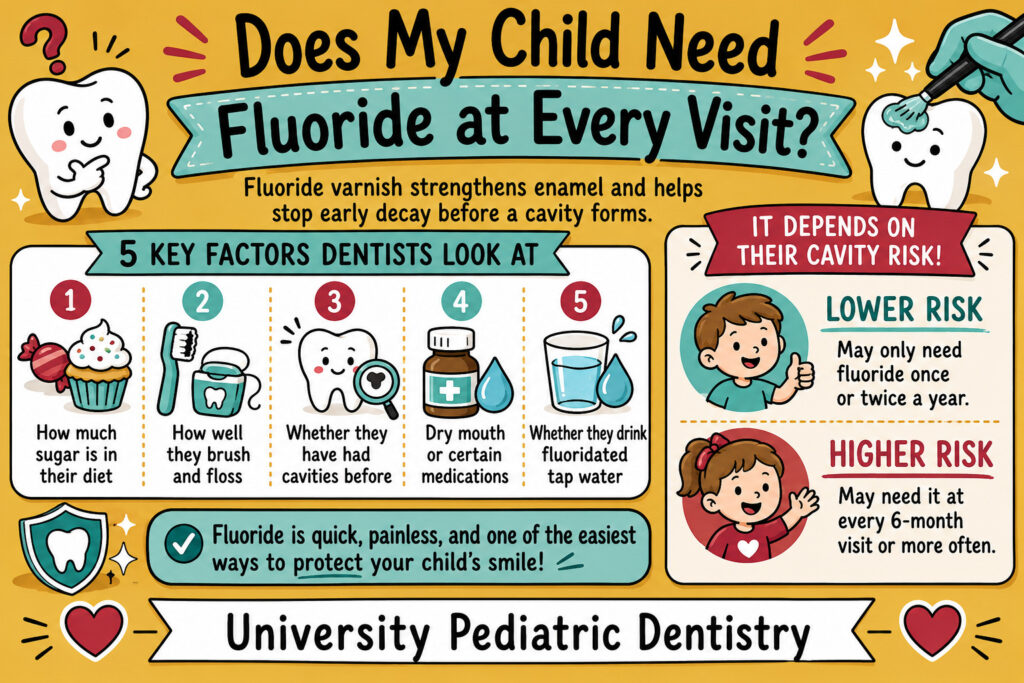
The frequency of fluoride treatments is directly tied to how susceptible a child is to developing cavities. Pediatric dentists use caries risk assessments to evaluate a range of factors before making a recommendation. These factors give our team a clear picture of where each child stands.
- Diet and sugar intake: Children who consume frequent sugary snacks or beverages are at higher risk and generally benefit from more regular fluoride applications.
- Oral hygiene habits: Kids who struggle with consistent brushing or flossing at home face a greater risk of decay between visits.
- History of cavities: A child who has had cavities in the past is more likely to develop new ones, making more frequent fluoride treatments a sensible precaution.
- Dry mouth or medical conditions: Certain health conditions and medications can reduce saliva production, which increases cavity risk significantly.
- Access to fluoridated water: Children who do not regularly drink fluoridated tap water may have a lower baseline level of fluoride exposure.
Each of these factors is weighed together, not in isolation, to arrive at the right recommendation for that child at that stage of development.
What This Looks Like in Practice
Not every child follows the same fluoride schedule, and that is by design. The right frequency depends entirely on the individual factors identified during a caries risk assessment.
Lower-Risk Children
For children who brush well, eat a balanced diet, drink fluoridated water and have no history of cavities, fluoride treatment may be recommended once or twice a year at their regular checkup. These children still benefit from the added protection, but the urgency is lower.
Higher-Risk Children
For children with a history of cavities, enamel defects, limited access to fluoridated water or other risk factors, more frequent fluoride applications may be recommended. Some children benefit from receiving fluoride at every six-month visit, while others with elevated risk may need it more often. Our team discusses the reasoning behind every recommendation so families feel informed and confident, not just compliant.
Fluoride Safety: What Parents Should Know
Concerns about fluoride safety are common, and they are worth addressing directly. At the concentrations used in professional varnish treatments, fluoride has a well-established safety record and is endorsed by every major dental and pediatric health organization. The amount applied during an in-office treatment is small and precisely controlled. If you have questions or hesitations, your child’s first dental visit or any follow-up appointment is a great time to talk through them openly with Dr. Funny. Our office welcomes those conversations and never rushes past a parent’s concerns.
Fluoride and the Bigger Picture at University Pediatric Dentistry
At University Pediatric Dentistry, preventive care is the foundation of everything we do, and fluoride is just one part of a comprehensive approach to keeping your child cavity-free. Dr. Funny is a board-certified pediatric dentist with a genuine passion for making every child feel at ease and every parent feel heard. Our sensory-friendly environment, attentive team and individualized treatment philosophy make us a dental home families return to visit after visit. For families without traditional dental insurance, we offer an in-house membership plan, and we also accept CareCredit, HSA and FSA funds and all other PPO plans to help make care as accessible as possible.
If you are wondering whether fluoride is right for your child or want to review their current prevention plan, we are ready to help. Contact our office to schedule an appointment and get personalized guidance from a team that puts your child’s health first.