

Medically Reviewed by Dr. Funny, DDS on July 28, 2026
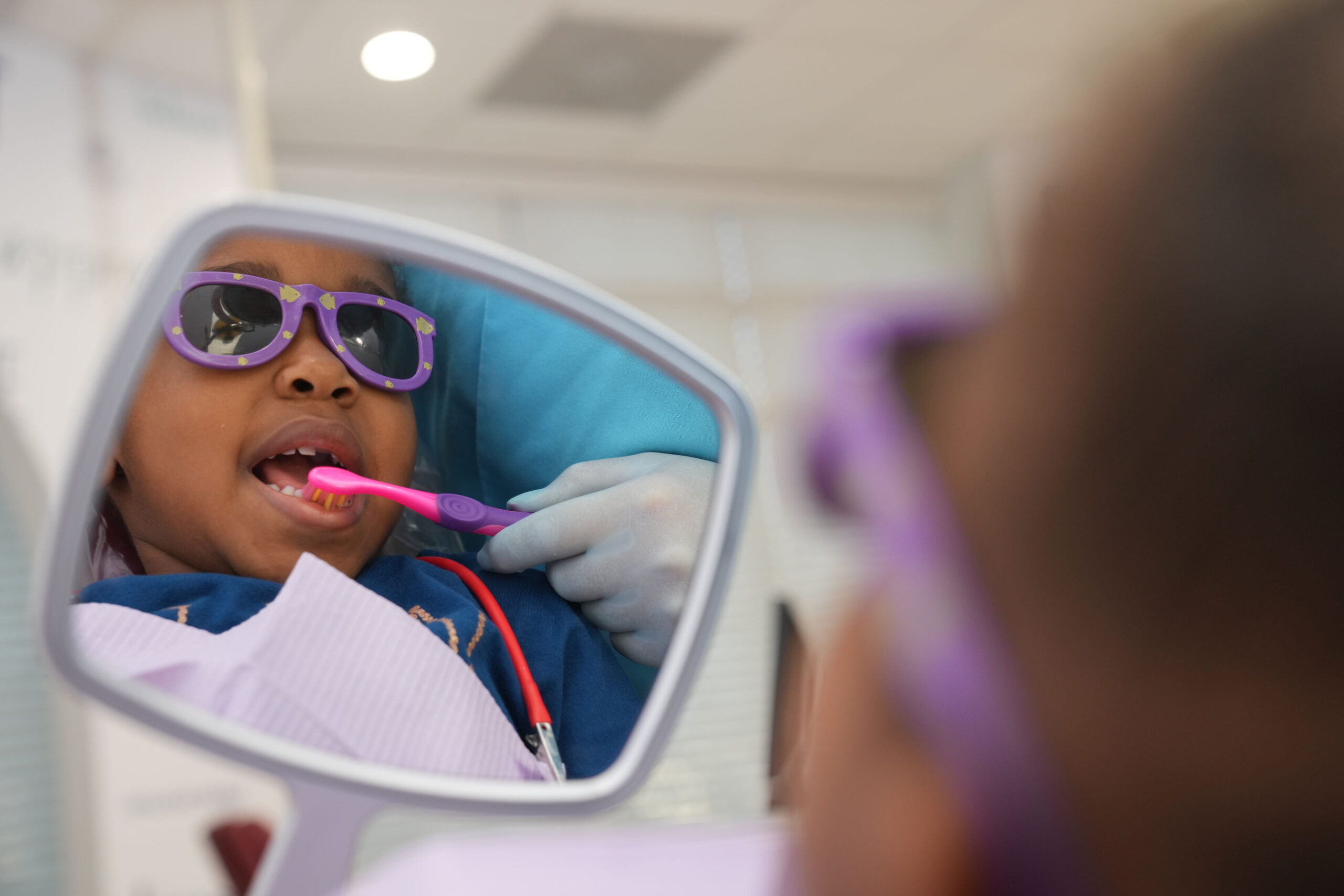
For most children, the answer is twice a year. That twice-yearly schedule removes plaque and tartar that brushing at home cannot reach, and it gives a pediatric dentist a chance to catch small concerns, such as an early cavity or a change in bite, before they turn into bigger problems. The right interval can shift for some children based on their individual risk factors, but every six months remains the starting point most pediatric dentists recommend.
At University Pediatric Dentistry, Dr. Funny and our team work with Charlotte families to build a preventive care schedule that fits each child’s individual needs. Whether your child is coming in for a first visit or has been a patient for years, we take the time to assess their risk factors and confirm they are on the right track before making any changes to their schedule.
What the Every-Six-Months Recommendation Really Means
Twice-yearly cleanings are the standard starting point for most children, and that schedule is backed by leading dental organizations. The American Academy of Pediatric Dentistry notes on its parent FAQ page that a checkup every six months is recommended to prevent cavities and other dental problems, though the right frequency for any child depends on their personal oral health. That guideline exists because professional cleanings accomplish things even the most consistent home routine cannot.
During each visit, our hygienists use professional instruments to remove tartar that has calcified onto tooth surfaces, buildup that no toothbrush can touch. We also perform a thorough exam that tracks bite development, checks for early decay, evaluates gum tissue, and monitors how permanent teeth are coming in. Reviewing tips for cavity prevention is also part of every appointment, so your child’s home routine stays effective as they grow.
What Happens During a Professional Cleaning Visit
A pediatric cleaning follows a predictable sequence designed to be quick and comfortable for young patients. Your child’s hygienist starts with a visual check of the teeth and gums, looking for early signs of decay, inflammation, or crowding before any instruments come out. From there, specialized tools remove plaque and hardened tartar from areas a toothbrush cannot reach, including along the gumline and between teeth.
Once the teeth are clean, we polish the surfaces to smooth away surface stains and make it harder for new plaque to stick between visits. Many children also receive a fluoride varnish treatment at the end of the appointment, which strengthens enamel and adds an extra layer of protection against cavities. For children with deep grooves in their molars, we may also discuss whether dental sealants could reduce their cavity risk between cleanings.
Depending on your child’s age and history, the visit may include digital X-rays to monitor how permanent teeth are developing beneath the gumline. We close every appointment with a few minutes of parent guidance, covering brushing technique, snack choices, or anything specific to your child’s smile that came up during the exam.
When Your Child May Need More Frequent Visits
Some children benefit from coming in three to four times a year rather than twice, and that is entirely normal. A history of frequent cavities, orthodontic appliances, a diet high in sugary foods or drinks, or difficulty maintaining a consistent brushing routine can all point toward a more frequent schedule. Children with special healthcare needs often require closer monitoring as well, since certain conditions and medications can affect oral health in ways that make added visits the safer choice.
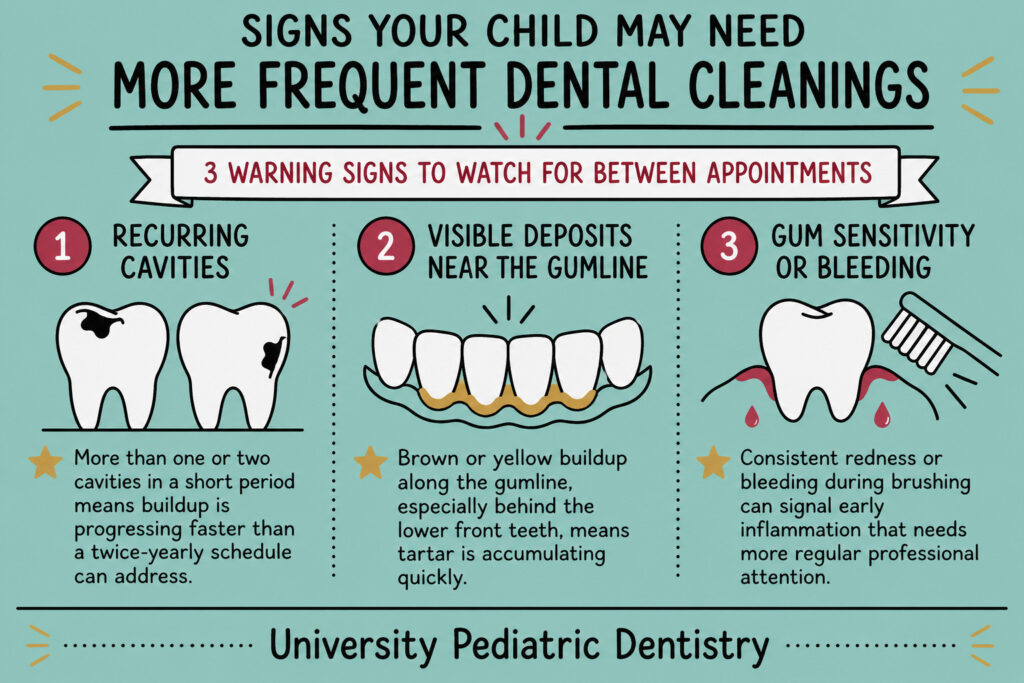
There are a few signs that may indicate your child’s current schedule needs an adjustment. Watch for these patterns between appointments:
- Recurring cavities: More than one or two cavities in a short period suggests that buildup is progressing faster than a twice-yearly schedule can address.
- Visible deposits near the gumline: Brown or yellow buildup along the gumline, especially behind the lower front teeth, means tartar is accumulating quickly.
- Gum sensitivity or bleeding: Consistent redness or bleeding during brushing can signal early inflammation that benefits from more regular professional attention.
Noticing one or more of these signs does not mean your child has a serious problem. It simply means we may want to adjust their schedule, and that is a conversation we are always happy to have.
Why Baby Teeth Cleanings Matter Even Though They Will Fall Out
It is easy to assume that primary teeth matter less since they are temporary, but the opposite is true. Baby teeth hold space for permanent teeth, guide proper jaw and bite development, and support clear speech and comfortable chewing. When a baby tooth is lost early to decay, the teeth around it can drift into that space and crowd out the permanent tooth trying to come in.
Untreated decay in a baby tooth can also progress quickly, since the enamel and dentin are thinner than in adult teeth, which means infection can reach the nerve faster than parents expect. Routine cleanings catch this kind of decay while it is still small and far easier to manage, which is part of why consistent visits matter just as much for a five-year-old as they do for a teenager with a full set of permanent teeth.
Why Starting Early Sets the Foundation
One of the most effective things a parent can do is establish a dental home early. Your child’s first dental visit should happen by their first birthday or within six months of their first tooth coming in, whichever comes first. Beginning visits early allows us to catch concerns before they develop, build positive associations with the dental office, and give you age-appropriate guidance on fluoride, home care, and diet.
Families who start this routine during infancy tend to find their children experience fewer cavities and less anxiety at appointments as they grow. Understanding the full picture of general pediatric dental care helps parents feel confident making decisions about their child’s oral health, and consistent professional cleanings are at the center of that picture.
Helping Your Child Feel Comfortable During Cleanings
A lot of the anxiety children feel about dental visits comes from the unknown, so we work to make cleanings feel familiar well before your child sits in the chair. Talking through what will happen in simple, positive language, avoiding words like “shot” or “drill,” and letting your child know cleanings should not hurt all go a long way toward a calmer visit.
Our office is designed with this in mind. We offer a sensory-friendly environment with private rooms, adjustable lighting, and accommodations for children with dental anxiety or additional support needs, so the visit itself feels safe rather than stressful. A consistent home routine helps too. If your child has not started a regular flossing routine yet, easing it in between cleanings can make the professional visit feel like less of a big change.
Frequently Asked Questions About Children’s Dental Cleanings
Do baby teeth really need professional cleanings if they eventually fall out?
Yes. Baby teeth hold space for permanent teeth, support clear speech, and allow comfortable chewing while your child grows. Decay in a primary tooth can also spread faster than in adult teeth because the enamel is thinner, so untreated cavities can affect the developing permanent tooth underneath. Regular cleanings catch small issues early, before they turn into bigger, more disruptive problems for a smile that is still forming.
What happens if my child misses a scheduled cleaning appointment?
Missing an appointment occasionally is not a major setback, but plaque and tartar continue building up the longer a visit is delayed. The best step is to reschedule as soon as possible rather than waiting for the next six-month window to come around. If it has been longer than six months since your child’s last cleaning, contact our office and we will help you get back on a consistent schedule.
Are dental cleanings uncomfortable or stressful for young children?
A routine cleaning should not cause pain. Most children feel mild pressure or an unusual sensation from the polishing tool, but the process itself is not painful. Some children feel nervous before a visit, especially early on, which is why we walk through each step in simple language and adjust our pace to match your child’s comfort level. Most children grow more relaxed with each visit that follows.
How do I know if my child needs a fluoride treatment during their cleaning?
Fluoride varnish is typically recommended based on a child’s individual cavity risk, water source, and current oral hygiene habits. During your child’s exam, we evaluate these factors and let you know whether a fluoride application makes sense for that visit. Many children benefit from fluoride varnish at routine cleanings as an added layer of protection for developing enamel.
What is the difference between a routine cleaning and a full dental exam?
A cleaning focuses on removing plaque and tartar and polishing the teeth, while an exam is a broader evaluation of your child’s oral health that includes checking for cavities, monitoring bite and jaw development, and reviewing gum tissue. Most pediatric visits combine both in a single appointment, so your child receives a clean smile and a complete health check at the same time.
Schedule Your Child’s Next Cleaning at University Pediatric Dentistry
University Pediatric Dentistry is a locally owned, owner-operated practice that has been serving Charlotte families for over 15 years. Dr. Funny, DDS, brings 18 years of experience caring for children at every stage of development, from early childhood through adolescence, and our entire team is built around making every visit feel safe and comfortable. We are proud to offer a sensory-friendly environment with private rooms, adjustable lighting, and accommodations for children with special needs or dental anxiety. You can learn more about our doctor and the philosophy behind the care we provide.
If your child is due for a cleaning or you are not sure where they stand, we are here to help you figure it out. Contact our office to schedule an appointment and let us build a plan that supports your child’s smile for years to come.
About the Author
Board-Certified Pediatric Dentist, Owner of University Pediatric Dentistry
Dr. Funny earned her DDS at New York University and completed her pediatric dental residency at Lincoln Medical and Mental Health Center. She is a board-certified pediatric dentist and a fellow of the American Academy of Pediatric Dentistry, and she has cared for Charlotte families at University Pediatric Dentistry since 2009.
Ready to Schedule Your Child's Visit?
In-network with Delta Dental PPO. All other PPO plans welcome. CareCredit financing available.