

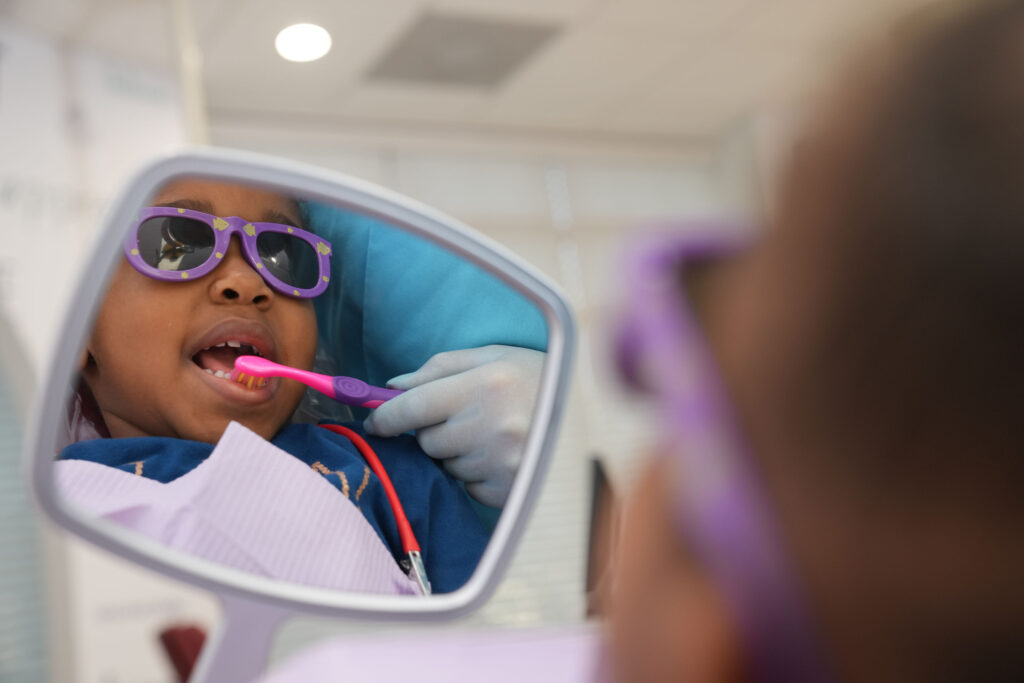
You have nailed the bedtime routine: bath, story, brush teeth. But somewhere between the toothbrush and the goodnight kiss, a question sneaks in. Should you be flossing, too? The answer might surprise you. Flossing should begin as soon as your child has two teeth that touch, which typically happens around ages 2 to 3. This one small habit, started early, can make a meaningful difference in your child’s oral health for years to come.
At University Pediatric Dentistry in Charlotte, NC, Dr. Funny and her team help parents understand exactly when and how to build healthy dental routines that last a lifetime. Whether your child is a toddler just sprouting their first molars or a school-age kid learning to do it solo, our pediatric dental services are designed to meet your family right where you are.
Why Flossing Matters for Baby Teeth
Many parents assume flossing can wait until their child has permanent teeth, but that is a common misconception worth addressing. Baby teeth may be temporary, but the space between them is a prime spot for plaque and food debris to accumulate. A toothbrush simply cannot reach those tight interproximal areas, no matter how thorough the brushing.
When plaque is left to linger between teeth, it creates the conditions for cavities, and childhood cavities are more common than most parents realize. According to the CDC’s oral health tips for children, more than half of children aged 6 to 8 years have had a cavity in at least one of their baby teeth. Flossing daily is one of the most effective ways to reduce that risk and protect the health of both primary and emerging permanent teeth.
When Should You Start and What Does That Look Like?
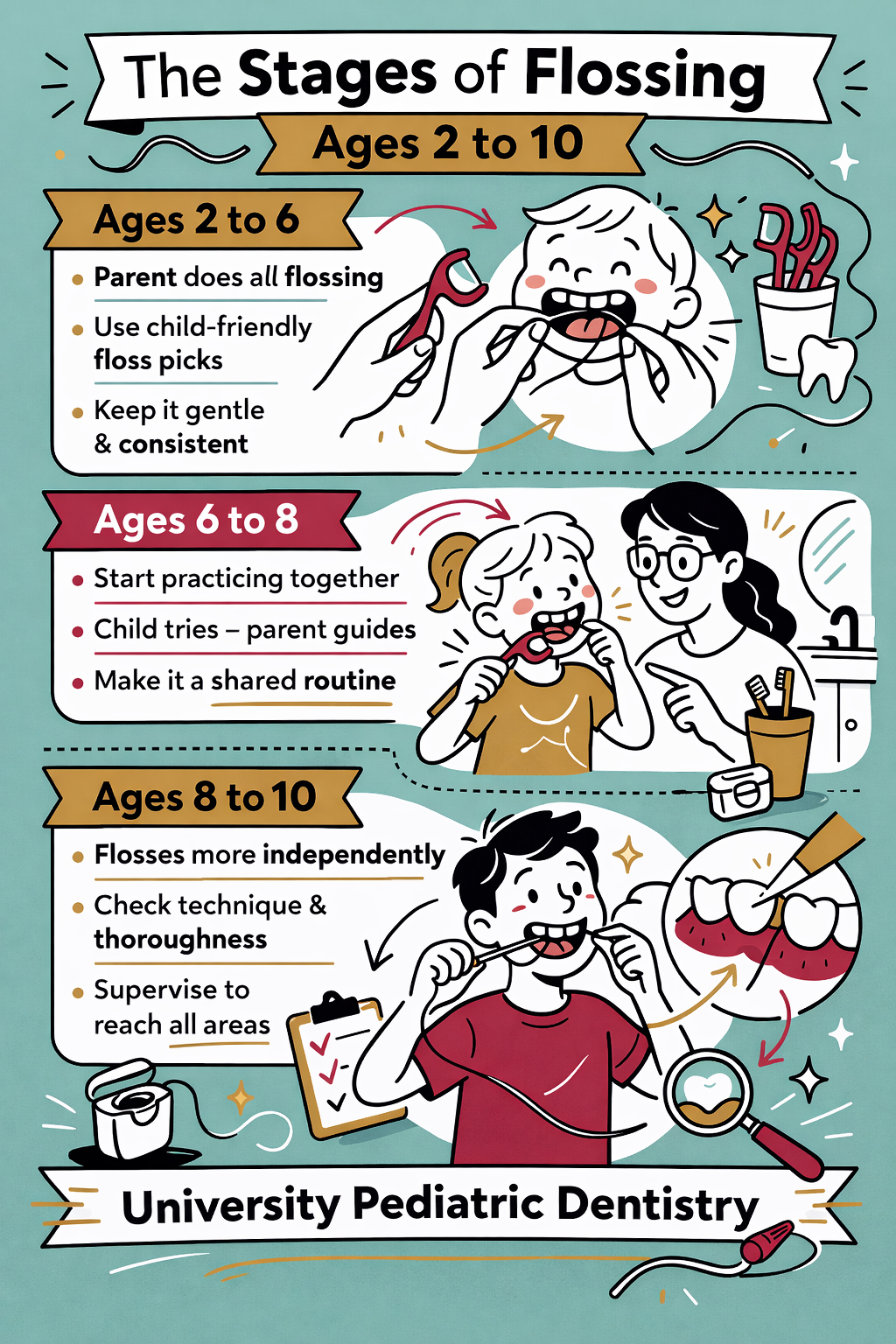
Flossing should begin once two of your child’s teeth are touching. For most children, this happens somewhere between ages 2 and 3 as the primary molars come in. If your little one still has noticeable gaps between all of their teeth, flossing can wait, but introducing the habit early is a great way to desensitize the routine and make it feel normal over time.
Parent Does It All: Ages 2 to 6
During these early years, you will be doing all of the flossing. Use child-friendly floss picks to make it easier to maneuver in a small mouth, and keep the experience gentle, consistent, and calm, even if your child is wiggly at first. The goal is simply to make it a familiar part of the nightly routine.
Guided Transition: Ages 6 to 8
This is the stage where your child can start trying to floss on their own while you stay close to guide and correct technique. Making it a shared routine at this age helps reinforce the habit and gives your child a sense of ownership over their oral health. Our pediatric dental FAQ is a great resource if you have questions about what to expect at each stage.
Growing Independence: Ages 8 to 10
Most children begin to develop the dexterity to floss more independently around this age. Supervision is still recommended to confirm they are getting between every tooth and reaching the gum line. With consistency, flossing becomes second nature long before the permanent teeth fully arrive.
Making Flossing a Habit Your Child Will Actually Keep
Getting a toddler or school-age child to embrace flossing is, admittedly, a challenge. The good news is that the early years are the easiest time to establish the habit, because children are still forming their routines and tend to follow the lead of the adults around them.
A few things that help are keeping the experience positive and brief, choosing flavored or colorful floss picks designed for kids, and doing it alongside your child so they can observe and imitate. Here are some simple strategies that work well for most families:
- Floss picks for kids: Colorful, flavored options make the process less intimidating and easier to maneuver in small mouths.
- Lead by example: Let your child watch you floss your own teeth, so they understand it is a habit for everyone, not just them.
- Keep it short: Starting with just a few teeth and gradually working up to a full mouth keeps the experience manageable and frustration-free.
- Use a reward chart: Tracking progress with stickers or a simple chart gives younger children something to look forward to each night.
If you want even more ideas for building a strong home care routine, our blog on cavity-fighting dental habits and our post on teaching brushing and flossing are both packed with practical tips. Remember that a little bleeding during the first few days of flossing is normal as gums adjust to the new habit. If bleeding persists beyond a week, that is a good reason to schedule a visit.
Trust University Pediatric Dentistry for Expert Guidance
At University Pediatric Dentistry, Dr. Funny brings over15 years of experience as a female pediatric dentist and practice owner to every appointment, and she genuinely loves helping Charlotte families build oral health routines that grow with their children. Her team creates a welcoming, low-stress environment where kids feel comfortable, and parents walk away with real, actionable answers. You can learn more about Dr. Funny and the rest of the care team on our meet our doctors page.
If you are wondering whether your child is ready to start flossing, or if you have questions about technique, timing, or the right tools to use, we are always happy to walk you through it at your child’s next visit.
Contact our office to schedule an appointment, and we look forward to partnering with your family for a lifetime of healthy smiles.
Ready to Schedule Your Child's Visit?
In-network with Delta Dental PPO. All other PPO plans welcome. CareCredit financing available.